

Language switcher


The Matrixmobil
The Extended Arm of the Therapist
Observations of physiological rhythms together with measurements carried out on the musculature in connection with various symptoms, led in a logical way to the development of Matrix Rhythm Therapy as a treatment method whose action conforms to Nature. It led further to the creation of the Matrixmobil as a medical therapeutic device. (weiterlesen…)
Areas of Application of Matrix Rhythm Therapy (MaRhyThe)
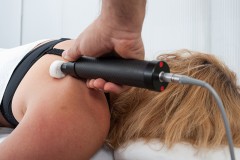
Mobilization of the region of the tendons of the M. Trapezius und M. Latissimus dorsi
Matrix Rhythm Therapy is used both for therapy and for diagnosis. It concerns all chronic illnesses that originate from disturbances in the microcirculation and in the temporal basis of the organism, i.e. its rhythm-based regulation processes.
It can help all people affected by damage to the nervous system and the musculoskeletal system. In particular, Matrix Rhythm Therapy can be used for the following purposes:
Who Uses MaRhyThe?
 A large number of holistically thinking, system-oriented medical service providers have successfully integrated Matrix Rhythm Therapy into their treatment concepts — including doctors, physical therapists, dentists, practitioners of alternative medicine, ergotherapists, medical massage therapists and clinics.
Starting with Germany, Austria and Switzerland, Matrix Rhythm Therapy is used today in 28 countries around the world.
Are you looking for a therapist in your region or neighborhood?
The Matrix Concept
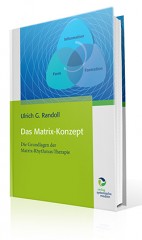
Fundamentals of Matrix Rhythm Therapy
by Dr. med. Ulrich G. Randoll
2014 (weiterlesen…)
The Principles of Matrix Rhythm Therapy – MaRhyThe
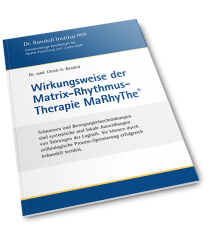
The first publication of the Dr. Randoll Institute: The Principles of Matrix Rhythm Therapy – MaRhyThe
The 32-page booklet presents the development of Matrix Rhythm Therapy from its beginnings in university research to its application in therapeutic practice. First-hand accounts are provided from therapists and patients (weiterlesen…)
Von der Gnathologie und Artikulationslehre zur ganzheitlichen Zahnmedizin
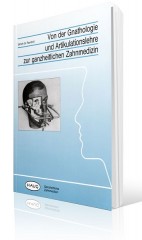
by Dr. Ulrich G. Randoll
(available only in German)
Video Microscopy
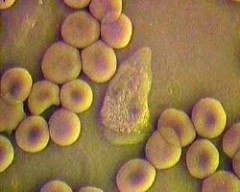
Capillary blood as seen with a video microscope: erythrocytes and granulocytes in action
Thanks to the constant development and improvement of scientific instruments such as video microscopes, it is now possible to study living cells in their real environment, instead of observing dead, dyed cells.
Acute Effects on Circulation
Implementation of Matrix Rhythm Therapy and Convetional Massage in Young Females and Comparison of Their Acute Effects on Circulation
Authors: Ferruh Tasinar, PhD, Ummuhan Bas Alsan, PhD, Nuran Sabir, MD, and Ugur Cavlat, PhD
(weiterlesen…)