

Language switcher


Aktuelle physiotherapeutische Methoden und ihre physiologischen Wirkprinzipien
Aus dem 20. Internationalen Matrix-Workshop
Tag 1, 26.09.2016: Vortrag Prof. Thomas Wolf
Im zweiten Vortrag des ersten Tages sprach Prof. Dr. Thomas Wolf über „Aktuelle physiotherapeutische Methoden und ihre physiologischen Wirkprinzipien“.
Er gab zu Anfang einen kurzen Überblick über 40 verschiedene Methoden der Physiotherapie und erwähnte die Problematik von Studien in diesem Bereich, deren (oft reduktionistischer) Ansatz aus der Pharmaforschung stammt. Aus biophysiologischer und biokybernetischer Sicht gibt es aber keine linearen Reaktionen, und ihre Komplexität lässt sich in solchen Studien nicht adäquat darstellen.

Update: Matrix-Konzept und Matrix-Rhythmus-Therapie
Aus dem 20. Internationalen Matrix-Workshop
Tag 1, 26.09.2016: Vortrag Dr. Ulrich G. Randoll
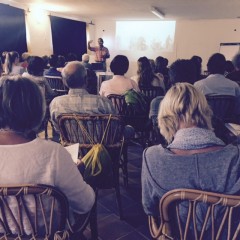 Im Eröffnungsvortrag des 20. Matrix-Kongresses präsentierte Dr. Randoll ein Übersichtsreferat, in dem er die verschiedenen Themen der Woche als systemisches Konzept zusammenführte. Im Mittelpunkt standen die ausgewählten Lebensprozesse und Prozessstörungen und deren Beziehungen zur zellulären Logistik.
Er stellte die klare Verbindung von Thorax-Atmung zum Herzkreislauf-, Lymph- und Nervensystem vor. Den Teilnehmern wurde die Bedeutung einer intakten Atemmuskulatur bewusst. (weiterlesen…)
Ideale Bedingungen für die Regulationsmedizin: Poseidon Therme und Matrix-Rhythmus-Therapie
Auftakt zum 20. Internationalen Matrix-Workshop
25.09.2016: Vortrag Dr. Ruth König, Medizinische Leiterin der Poseidon Therme
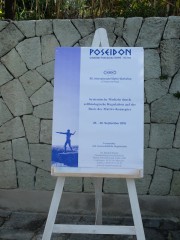 „Wasser ist unser bestes Heilmittel und die Matrix-Rhythmus-Therapie unser bester Verbündeter“, sagte Dr. Ruth König, leitende Medizindirektorin der Poseidon Therme zum Auftakt des Kongresses. (weiterlesen…)
Fortbildung: Rhythmus und Schwingung – Grundfunktionen der Zelle und des Gehens

© Fußschule München
Ein Tageskurs mit Thomas Rogall und Dr. med Ulrich G. Randoll
am 22. Oktober 2016
in der Fresenius Hochschule München
Charles-de-Gaulle-Straße 2
81737 München
Teilnahmegebühr: 320 Euro (weiterlesen…)
MaRhyThe Practitioners from India on visit in Germany
Advanced Training at Dr. Randoll Institute
June, 2016
Once again Dr. Ulrich Randoll informed a designated group of Matrix Rhythm Therapists from India about the latest update on Matrix Research and Matrix Theory followed by hands-on application training in his clinic in Munich, Germany.
The exchange was very fruitful.
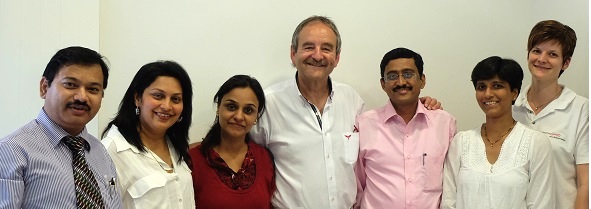
Dr. Ulrich Randoll (middle) and his medical secretary Bianca Tormaehlen (far right) hosted in June therapists from India. From left to right: Anil Deshpande, Dr. Meenakshi Pandit, Dr. Pranjali A. Dhamane, Dr. Sandeep Bhagwat, Dr. Sowkhya Sagare
Dr. Sandeep Bhagwat and Dr. Meenakshi Pandit, who are practitioners and teachers of Matrix Rhythm Therapy in India, shared their success stories, as well as Dr. Pranjali A. Dhahmane and Dr. Sowkhya Sagare, who are both therapists as well as lecturers. (weiterlesen…)
Training Courses & Workshops
We organize training courses, seminars and workshops with Dr. Randoll and his lecturing colleagues. The latest dates and programs are given here, together with information concerning registration.
How Matrix Rhythm Therapy (MaRhyThe) Works
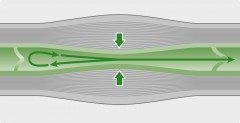
From the so-called physiological tremor to muscle trembling, the musculature synchronizes its vibrations in a more or less intensive manner, thereby maintaining the microcirculation of blood and lymph drainage.
The therapeutic action of Matrix Rhythm Therapy is based on the vibratory behavior of the skeletal musculature and its characteristic frequency/amplitude spectrum. Although the heart muscle does the main work in the overall circulation of blood, down to the smallest capillaries, the action of the heart must be supplemented by additional mechanisms in order to insure an adequate supply of oxygen and nutrients to the cells as well as the removal of metabolic end-products from tissue.
The Scientific Principles of Matrix Rhythm Therapy
Living systems never have rigidly fixed frequencies, but only frequency regions. This variability permits the system to constantly adjust and adapt itself – an ability which is vital to the survival of the organism.
Rhythmic actions such as the heartbeat or brain waves for example, act on living processes like the director of an orchestra. These rhythms are coupled to directed motions of the fluid which surrounds the individual cells. Healthy tissues are characterized by certain specific frequencies of the rhythms which organize their internal processes.